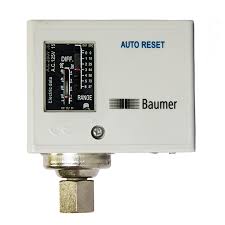
? Pressure Switch – Full Description
A pressure switch is an electromechanical device that monitors the pressure of gases or liquids in a system. It activates or deactivates an electrical circuit when a predefined pressure level is reached, controlling equipment like pumps, compressors, and safety systems.
? Overview
Pressure switches are used to automate processes, protect systems from overpressure or underpressure, and ensure safe and efficient operation. They are commonly found in industries like oil and gas, HVAC, water treatment, and manufacturing.
? Key Features
-
Types of Pressure Switches:
-
Mechanical Pressure Switch: Operates using a diaphragm, piston, or Bourdon tube to trigger a switch.
-
Electronic Pressure Switch: Uses sensors and digital electronics for precise control and monitoring.
-
Differential Pressure Switch: Activates when the difference between two pressure points exceeds a set value.
-
Vacuum Pressure Switch: Designed for systems that monitor and control negative pressure (below atmospheric pressure).
-
-
Pressure Range:
-
Low Pressure: 0.01 to 1 bar (0.14 to 14.5 psi)
-
Medium Pressure: 1 to 100 bar (14.5 to 1450 psi)
-
High Pressure: 100 to 1000+ bar (1450 to 14,500 psi)
-
-
Switching Mechanism:
-
SPST (Single Pole Single Throw): Simple on/off operation.
-
SPDT (Single Pole Double Throw): Provides two output options for versatility.
-
DPDT (Double Pole Double Throw): Controls two circuits simultaneously.
-
-
Adjustment Options:
-
Fixed Set Point: Pre-calibrated at a specific pressure.
-
Adjustable Set Point: Allows users to change the pressure activation level.
-
-
Material Construction:
-
Stainless Steel: Corrosion-resistant for harsh environments.
-
Brass: Ideal for general-purpose applications with non-corrosive fluids.
-
Plastic: Lightweight and cost-effective for light-duty use.
-
-
Electrical Ratings:
-
Voltage Range: 12V to 480V (AC or DC).
-
Current Capacity: 0.5A to 20A (varies by model).
-
-
Protection Ratings:
-
IP65/IP67: Dustproof and water-resistant for industrial applications.
-
Explosion-proof models for hazardous environments (ATEX-certified).
-
? Applications
-
Industrial Automation: Controls pressure levels in hydraulic and pneumatic systems.
-
HVAC Systems: Monitors air pressure for compressors and air handlers.
-
Oil & Gas: Ensures safe pressure levels in pipelines and drilling operations.
-
Water Treatment: Activates pumps when water pressure drops or exceeds limits.
-
Fire Suppression Systems: Monitors and controls pressure in fire sprinkler systems.
-
Medical Equipment: Regulates pressure in oxygen delivery systems and other medical devices.
✅ Advantages
-
Automation: Automatically starts or stops equipment based on pressure.
-
Safety: Protects systems from damage due to pressure fluctuations.
-
Reliability: Long-lasting operation under extreme conditions.
-
Customizable: Adjustable pressure settings for specific applications.
-
Energy Efficiency: Reduces energy consumption by controlling equipment cycles.
? Installation & Maintenance
-
Installation:
-
Mount in the correct orientation (vertical or horizontal).
-
Ensure compatibility with the system’s pressure and electrical requirements.
-
Use thread sealant (e.g., Teflon tape) for leak-free connections.
-
-
Adjustment:
-
Set the pressure point according to the system’s needs.
-
Check the manufacturer’s guidelines for proper calibration.
-
-
Maintenance:
-
Regularly inspect for leaks, corrosion, and wear.
-
Test and recalibrate periodically for accurate performance.
-