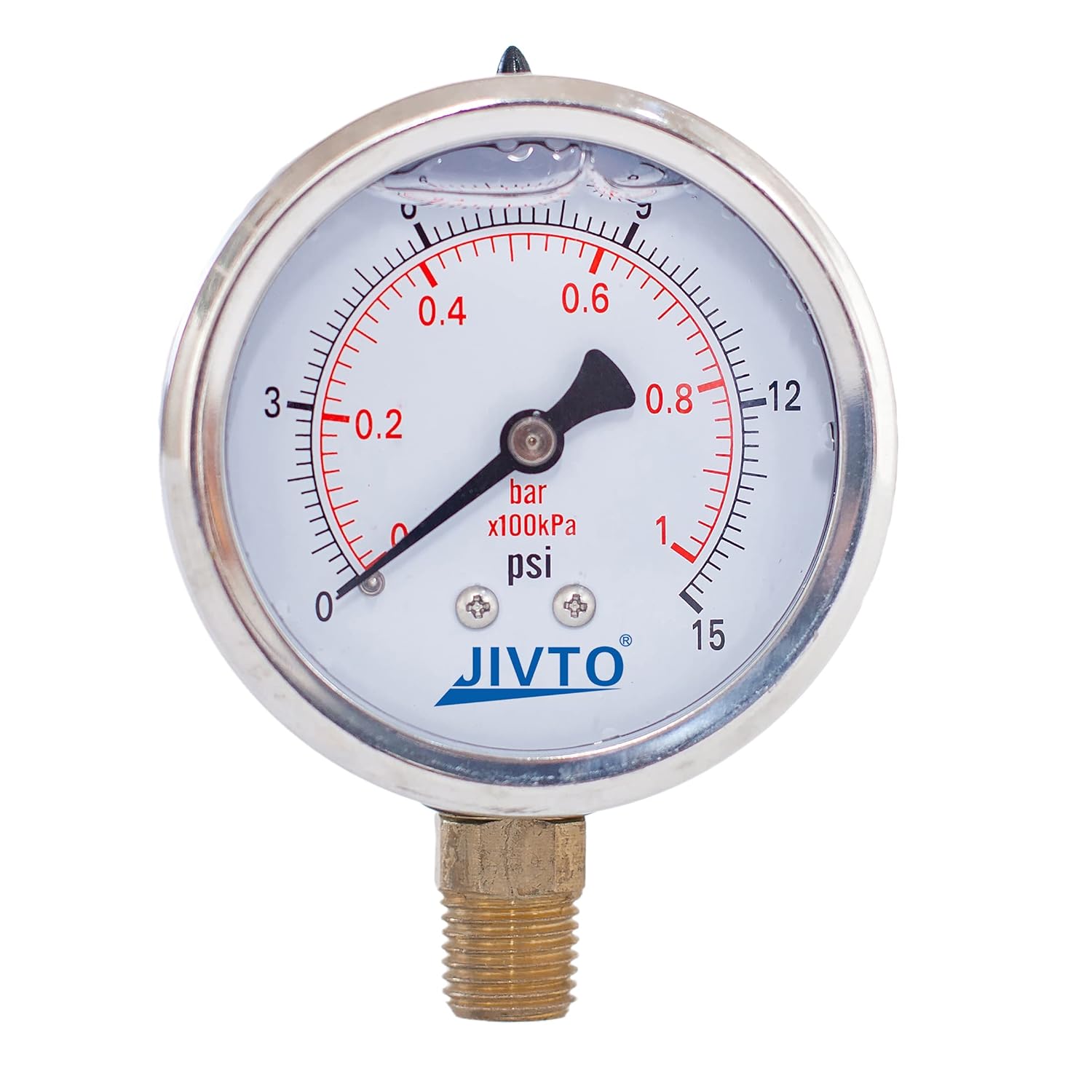
? Pressure Gauge – Full Description
A pressure gauge is a mechanical or electronic device used to measure and display the pressure of gases or liquids in various systems. It provides real-time pressure readings to ensure equipment operates safely and efficiently. Pressure gauges are widely used in industries such as manufacturing, oil and gas, automotive, and HVAC systems.
? Overview
Pressure gauges monitor the pressure in pipelines, tanks, and machinery to prevent overpressure and underpressure conditions. They come in analog (mechanical) or digital forms, offering accurate measurements across different pressure ranges.
? Key Features
-
Types of Pressure Gauges:
-
Bourdon Tube Gauge: Most common mechanical gauge, uses a curved tube to measure pressure.
-
Digital Pressure Gauge: Displays pressure readings electronically for high accuracy.
-
Differential Pressure Gauge: Measures the difference between two pressure points.
-
Vacuum Gauge: Measures pressure below atmospheric levels (negative pressure).
-
Capsule Gauge: Measures low-pressure gases, ideal for sensitive applications.
-
Diaphragm Gauge: Suitable for measuring low-pressure fluids and gases.
-
-
Pressure Measurement Range:
-
Low-pressure gauges: 0 to 1 bar (0 to 14.5 psi)
-
Medium-pressure gauges: 1 to 1000 bar (14.5 to 14,500 psi)
-
High-pressure gauges: 1000+ bar (14,500+ psi)
-
-
Accuracy Class:
-
Industrial: ± 1% to ±2% of full scale.
-
Laboratory: ± 0.1% to ±0.25% of full scale for high precision.
-
-
Material Construction:
-
Stainless Steel: Corrosion-resistant for harsh environments.
-
Brass: Suitable for non-corrosive fluids like air and water.
-
Plastic Casing: Lightweight and cost-effective for general use.
-
-
Dial Sizes:
-
Ranges from 1.5 inches (40 mm) to 10 inches (250 mm) for various visibility needs.
-
-
Connection Types:
-
Bottom Mount (Radial): Common for pipelines and machinery.
-
Back Mount (Axial): For panel mounting and tight spaces.
-
Flange Mount: Fixed securely to surfaces for industrial use.
-
-
Output Options (for Digital Gauges):
-
Analog (4-20 mA)
-
Digital (RS485, Modbus)
-
? Applications
-
Industrial: Monitors pressure in boilers, compressors, and hydraulic systems.
-
HVAC Systems: Measures refrigerant pressure and air flow.
-
Oil & Gas: Monitors pressure in pipelines and refining processes.
-
Automotive: Measures fuel, oil, and tire pressure.
-
Medical: Used in oxygen tanks and medical devices.
-
Food & Beverage: Ensures process safety in sanitary environments.
✅ Advantages
-
Accurate Monitoring: Provides precise pressure readings for safe operation.
-
Durability: Withstands harsh environments with rugged designs.
-
Versatility: Available for gases, liquids, and different pressure ranges.
-
Ease of Use: Simple installation and maintenance.
-
Custom Options: Multiple dial sizes, materials, and output signals.
? Installation & Maintenance
-
Installation:
-
Ensure proper gauge orientation (bottom or back mount).
-
Use Teflon tape or sealant for leak-free connections.
-
-
Calibration:
-
Regularly calibrate to ensure accuracy (recommended every 6-12 months).
-
-
Inspection:
-
Check for leaks, corrosion, and mechanical damage.
-
Ensure the gauge operates within its pressure range.
-