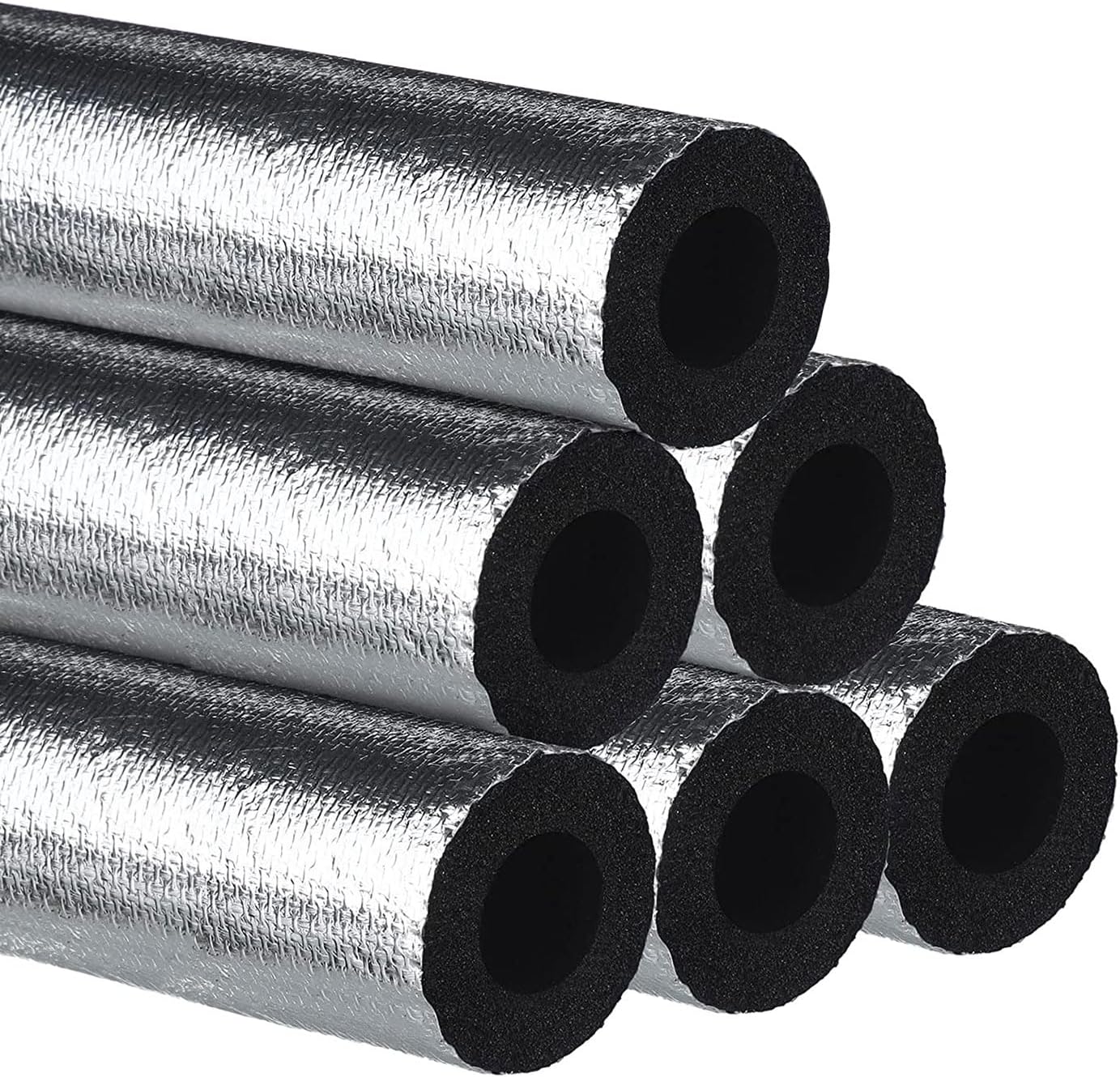
? Insulation Foam Tube – Full Description
Insulation foam tubes are cylindrical foam coverings used to insulate pipes and tubing. They protect against temperature loss, condensation, and physical damage, improving energy efficiency and reducing maintenance costs. These tubes are widely used in residential, commercial, and industrial applications for plumbing, HVAC systems, and refrigeration.
? Overview
Insulation foam tubes wrap around pipes to maintain temperature, prevent freezing or overheating, and reduce noise from fluid movement. They are typically made from closed-cell foam materials, offering excellent thermal resistance and moisture protection.
? Key Features
-
Material Composition:
-
Polyethylene Foam: Lightweight, flexible, and cost-effective for general use.
-
Nitrile Rubber (NBR): Flexible and resistant to oils, chemicals, and UV exposure.
-
EPDM (Ethylene Propylene Diene Monomer): High-temperature tolerance and weather-resistant.
-
PVC Foam: Durable and moisture-resistant for outdoor use.
-
-
Thermal Performance:
-
R-Value (Thermal Resistance): Typically ranges from 2.5 to 5 per inch of thickness.
-
Effective in temperatures from -40°C to 120°C (-40°F to 248°F), depending on material.
-
-
Sizes and Dimensions:
-
Inner Diameter (ID): Available from ¼ inch to 4 inches to fit various pipe sizes.
-
Wall Thickness: Commonly 3/8 inch, 1/2 inch, and 1 inch for varying insulation needs.
-
Lengths: Standard lengths range from 1m to 2m (3 to 6 feet).
-
-
Design Variations:
-
Pre-Slit or Split Tubes: Easy to install over existing pipes.
-
Non-Slit Tubes: Continuous, seamless insulation for new installations.
-
Self-Sealing: Adhesive lining for secure, quick installation.
-
-
Protective Coatings (Optional):
-
UV-resistant for outdoor use.
-
Anti-microbial for hygiene-critical environments.
-
? Applications
-
HVAC Systems: Insulates air ducts and refrigerant lines to prevent heat loss and condensation.
-
Plumbing: Protects water pipes from freezing in cold climates.
-
Industrial Piping: Minimizes energy loss in chemical processing and steam lines.
-
Refrigeration: Prevents condensation on cold pipes and reduces frost build-up.
-
Marine and Automotive: Insulates fluid lines in vehicles and vessels.
✅ Advantages
-
Energy Efficiency: Reduces heat transfer, lowering heating and cooling costs.
-
Moisture Protection: Prevents condensation, reducing corrosion and mold growth.
-
Noise Reduction: Damps sound from fluid flow and mechanical vibrations.
-
Durability: Resistant to chemicals, UV exposure, and physical wear.
-
Easy Installation: Lightweight and available with pre-slit or self-sealing options.
? Installation and Maintenance
-
Preparation: Clean and dry the pipe surface.
-
Application: Slide or wrap the foam tube around the pipe.
-
Sealing: Use adhesive tape or self-sealing edges to secure the insulation.
-
Inspection: Regularly check for wear, gaps, or moisture accumulation.