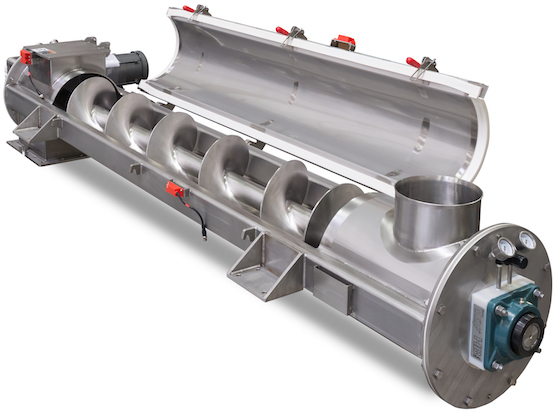
?️ Screw Conveyor – Full Description
A Screw Conveyor is a mechanical device used to transport materials in a horizontal or inclined manner through a tube or trough by means of a rotating helical screw blade (also known as a "flight"). This type of conveyor is commonly used in industries like agriculture, food processing, chemical manufacturing, and mining to move bulk materials such as grain, sand, flour, and powders.
? Overview
Screw conveyors are designed for the efficient transportation of bulk materials, especially when materials are difficult to handle due to their shape or consistency. They can convey materials both horizontally and at steep angles, depending on the design and application. Screw conveyors are ideal for moving powders, pellets, grains, and even liquids or slurries when adapted.
? Key Components of a Screw Conveyor
-
Screw (Flighting):
-
The helical blade that rotates inside the conveyor tube or trough to move materials. The size, pitch, and design of the screw determine the flow rate and capacity of the conveyor.
-
-
Housing/Trough:
-
A tube or trough that contains the rotating screw. The material is moved along the length of the housing by the screw's motion. Troughs can be open, covered, or enclosed based on the application.
-
-
Drive Unit:
-
Typically consists of a motor, gearbox, and coupling that drives the screw's rotation. The motor power depends on the size of the conveyor and the material being moved.
-
-
End Bearings:
-
Bearings that support the ends of the screw and enable smooth rotation. These bearings are mounted at both ends of the screw to reduce friction and wear.
-
-
Screw Conveyor Shaft:
-
The central shaft that supports the helical screw. The shaft is usually made of high-strength materials like steel to withstand heavy loads.
-
-
Hopper/Feeding System:
-
An optional component at the start of the conveyor that stores or feeds the material into the screw conveyor. It is important for uniform material flow.
-
-
Discharge Port:
-
The point where the material exits the conveyor. This can be controlled with a discharge valve or adjustable outlet depending on the system's design.
-
? Working Principle of a Screw Conveyor
-
Material Entry:
-
Material enters the screw conveyor via the hopper or feeder at one end of the conveyor.
-
-
Screw Rotation:
-
The screw inside the conveyor tube or trough rotates, pushing the material forward. The rotation of the screw generates motion that moves the material along the conveyor.
-
-
Material Transport:
-
As the screw turns, it carries the material along the length of the conveyor. For inclined conveyors, gravity helps in moving the material.
-
-
Material Discharge:
-
The material exits at the discharge port at the end of the conveyor, where it can be collected or transferred to another system.
-
? Applications of Screw Conveyors
-
Agriculture:
-
Used for transporting grains, seeds, and other bulk materials like fertilizers, animal feed, and silage.
-
-
Food Processing:
-
Commonly used to convey ingredients like flour, sugar, spices, or for moving processed food products in an enclosed system to prevent contamination.
-
-
Chemical Manufacturing:
-
Moves chemicals, powders, or other bulk materials in production or packaging plants.
-
-
Mining and Materials Handling:
-
Ideal for transporting materials like coal, sand, or aggregates in mining and construction industries.
-
-
Wastewater Treatment:
-
Used to convey sludge, chemicals, or waste materials in treatment plants.
-
✅ Advantages of a Screw Conveyor
-
Efficient Material Handling:
-
Can transport a wide range of materials, including bulk powders, grains, pellets, and even semi-solid or slurry materials.
-
-
Space-Saving Design:
-
Screw conveyors can be designed to fit into confined spaces, making them ideal for use in industries with limited space.
-
-
Variable Angles:
-
Can be used horizontally or inclined, offering flexibility in layout and material transport.
-
-
Low Maintenance:
-
With fewer moving parts compared to other types of conveyors, screw conveyors require less maintenance.
-
-
Cost-Effective:
-
Relatively inexpensive and efficient for moving materials over short to moderate distances.
-
-
Customizable:
-
Can be designed to meet specific requirements, such as varying the screw design, conveyor length, and materials used.
-
⚠️ Limitations of Screw Conveyors
-
Capacity Limitations:
-
The capacity of a screw conveyor is typically lower than other conveyors like belt conveyors. This can be a limitation for high-volume transport.
-
-
Clogging & Jamming:
-
If material properties are not considered (e.g., sticky or wet materials), screw conveyors can become clogged or jammed, reducing efficiency.
-
-
Wear and Tear:
-
Continuous use can lead to wear on the screw flights, particularly when handling abrasive or corrosive materials.
-
-
Not Suitable for Very Heavy or Large Materials:
-
Screw conveyors are not the ideal solution for transporting very large or heavy objects.
-
? Specifications of a Screw Conveyor (Example)
| Feature | Details |
|---|---|
| Capacity | Up to 1000 TPH (tons per hour) |
| Length | From a few meters to over 30 meters |
| Diameter | From 4 inches to 24 inches |
| Material | Carbon Steel, Stainless Steel, Alloy Steel |
| Incline Angle | Up to 45° (depends on material type) |
| Motor Power | 0.5 HP to 30 HP (depending on size and application) |
| Operating Temperature | -20°C to 120°C (depending on material) |
?️ Maintenance & Care of Screw Conveyors
-
Regular Inspections:
-
Inspect the screw flights and bearings for wear and damage. Look for signs of erosion or clogging.
-
-
Lubrication:
-
Ensure the bearings and rotating parts are properly lubricated to reduce friction and prevent overheating.
-
-
Clearing Blockages:
-
Regularly clear any blockages to ensure smooth material flow.
-
-
Replacement of Worn Parts:
-
Replace worn-out flights, bearings, or seals to prevent system failure.
-
-
Cleaning:
-
Clean the system periodically to remove material buildup, especially when conveying food-grade or hygienic materials.
-