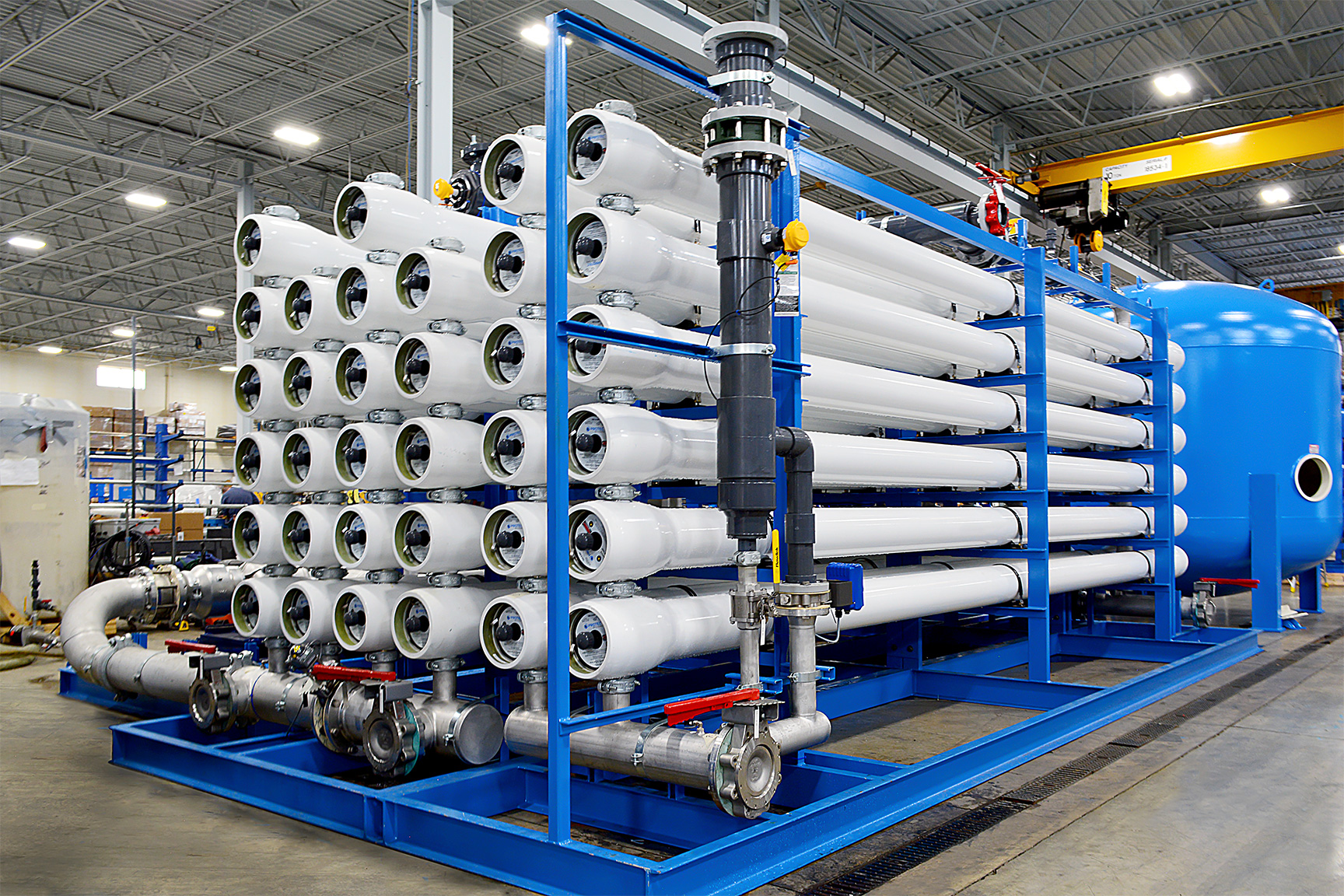
? Reverse Osmosis (RO) System – Full Description
A Reverse Osmosis (RO) system is a water purification method that uses a semi-permeable membrane to remove contaminants, impurities, and dissolved solids from water. It works by applying pressure to push water through the membrane, leaving behind pollutants and providing clean, purified water.
? Overview
Reverse osmosis is one of the most effective water filtration technologies, capable of removing up to 99% of contaminants like bacteria, viruses, heavy metals, and dissolved salts. It is widely used in residential, commercial, and industrial applications to produce safe and clean drinking water.
? Key Components of an RO System
-
Pre-Filtration Stage:
-
Sediment Filter: Removes large particles like dirt, sand, and rust.
-
Carbon Filter: Eliminates chlorine, chemicals, and organic compounds.
-
-
Reverse Osmosis Membrane:
-
The heart of the system, this semi-permeable membrane filters out microscopic contaminants (0.0001 microns).
-
Removes heavy metals (lead, arsenic), fluoride, bacteria, viruses, and salts.
-
-
Post-Filtration Stage:
-
Carbon Polishing Filter: Improves taste and removes residual odors.
-
-
Storage Tank (in residential systems):
-
Holds purified water for easy access when needed.
-
-
Optional Stages (for advanced systems):
-
UV Sterilizer: Kills remaining bacteria and viruses.
-
Remineralization Filter: Adds essential minerals (like calcium and magnesium) back into the water for better taste and health benefits.
-
? Working Principle of RO System
-
Pressurized Feed Water: Water is pushed through a pre-filtration system to remove larger impurities.
-
Membrane Filtration: Water passes through the RO membrane, separating contaminants from purified water.
-
Wastewater Drainage: Contaminants and rejected water are flushed down the drain.
-
Clean Water Storage: Purified water is stored in a tank or delivered directly through a faucet.
? Applications of RO Systems
-
Residential: Purifies tap water for drinking and cooking.
-
Commercial: Provides clean water for restaurants, cafes, and offices.
-
Industrial: Desalination, wastewater treatment, and production processes.
-
Medical & Pharmaceutical: Produces ultra-pure water for lab use.
-
Agriculture: Provides purified water for irrigation and livestock.
✅ Advantages of a Reverse Osmosis System
-
Effective Filtration: Removes up to 99% of contaminants, including heavy metals and bacteria.
-
Improved Taste & Odor: Eliminates chlorine and other unpleasant elements.
-
Cost-Effective: Reduces the need to buy bottled water.
-
Eco-Friendly: Minimizes plastic waste from bottled water consumption.
-
Versatile: Customizable for homes, businesses, and industries.
⚠️ Limitations of RO Systems
-
Water Waste: Produces wastewater during filtration (usually 3:1 ratio of waste to clean water).
-
Energy Use: Some systems (e.g., industrial RO) require significant energy for operation.
-
Maintenance: Regular filter and membrane replacement is necessary.
-
Mineral Loss: Removes beneficial minerals, though some systems offer remineralization.
? Maintenance & Care
-
Filter Replacement:
-
Sediment & Carbon Filters: Every 6-12 months.
-
RO Membrane: Every 2-3 years, depending on water quality.
-
Post-Filters: Every 12 months.
-
-
System Cleaning:
-
Sanitize the system annually to prevent bacterial growth.
-
-
Check for Leaks:
-
Regularly inspect fittings and connections.
-