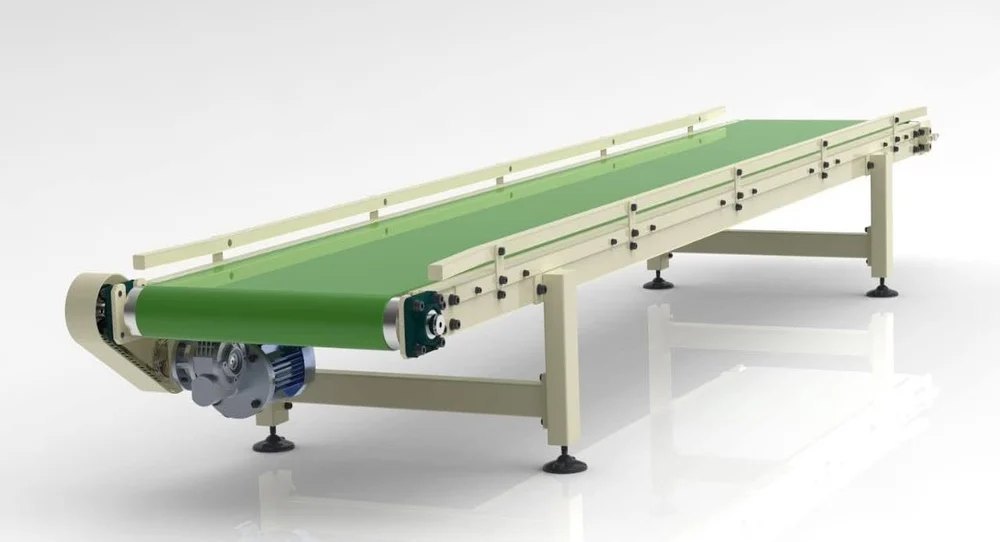
? Conveyor – Full Description
A conveyor is a mechanical system used to transport materials, goods, or products from one location to another. It is commonly used in industries such as manufacturing, packaging, logistics, mining, and food processing to increase efficiency, reduce labor costs, and ensure consistent movement of materials.
? Overview
Conveyors are designed to handle a wide range of materials, including raw goods, finished products, and bulk items. They can be powered by motors, gravity, or manual operation and are customizable based on load capacity, speed, and application.
? Key Features
-
Types of Conveyors:
-
Belt Conveyor: Uses a continuous belt to move materials; ideal for bulk items and packaged goods.
-
Roller Conveyor: Consists of rollers for smooth handling of heavy loads or cartons.
-
Chain Conveyor: Uses chains for moving heavy-duty items such as pallets and machinery.
-
Screw Conveyor: Utilizes a rotating helical screw blade to move granular or powder materials.
-
Pneumatic Conveyor: Uses air pressure or vacuum to transport light, loose materials like grains or powders.
-
Slat Conveyor: Employs slats on a chain for transporting heavy or hazardous items.
-
Overhead Conveyor: Suspended from ceilings to transport items above floor level.
-
-
Material Construction:
-
Steel: Durable and suitable for heavy loads.
-
Aluminum: Lightweight and corrosion-resistant.
-
Plastic: Ideal for light-duty and clean environments (e.g., food handling).
-
-
Speed & Control:
-
Variable speed control for adjusting movement.
-
Automated systems with programmable logic controllers (PLCs) for precision handling.
-
-
Load Capacity:
-
Light, medium, and heavy-duty designs to accommodate different weights (from a few kilograms to several tons).
-
-
Design Customization:
-
Inclined, horizontal, or curved designs.
-
Modular components for easy expansion and maintenance.
-
? Applications
-
Manufacturing: Moves raw materials, components, and finished products along production lines.
-
Warehousing & Logistics: Automates sorting, packaging, and distribution processes.
-
Food Processing: Safely transports food items through different stages of production.
-
Mining & Construction: Handles bulk materials like ore, sand, and gravel.
-
Pharmaceuticals: Ensures safe, sterile transport of medicines and medical devices.
✅ Advantages
-
Efficiency: Increases throughput and reduces manual handling.
-
Safety: Minimizes worker injuries by automating heavy lifting and repetitive tasks.
-
Scalability: Adaptable to different industries and facility layouts.
-
Cost-Effective: Reduces labor costs and enhances productivity.
-
Customization: Flexible designs to meet specific operational needs.
? Maintenance & Safety
-
Routine Inspections: Check belts, rollers, and motors for wear and tear.
-
Lubrication: Regularly lubricate moving parts to prevent friction.
-
Alignment Checks: Ensure belts and rollers stay aligned for smooth operation.
-
Emergency Stops: Install safety features like emergency stop buttons and guards.